Introductory Concept of Communication
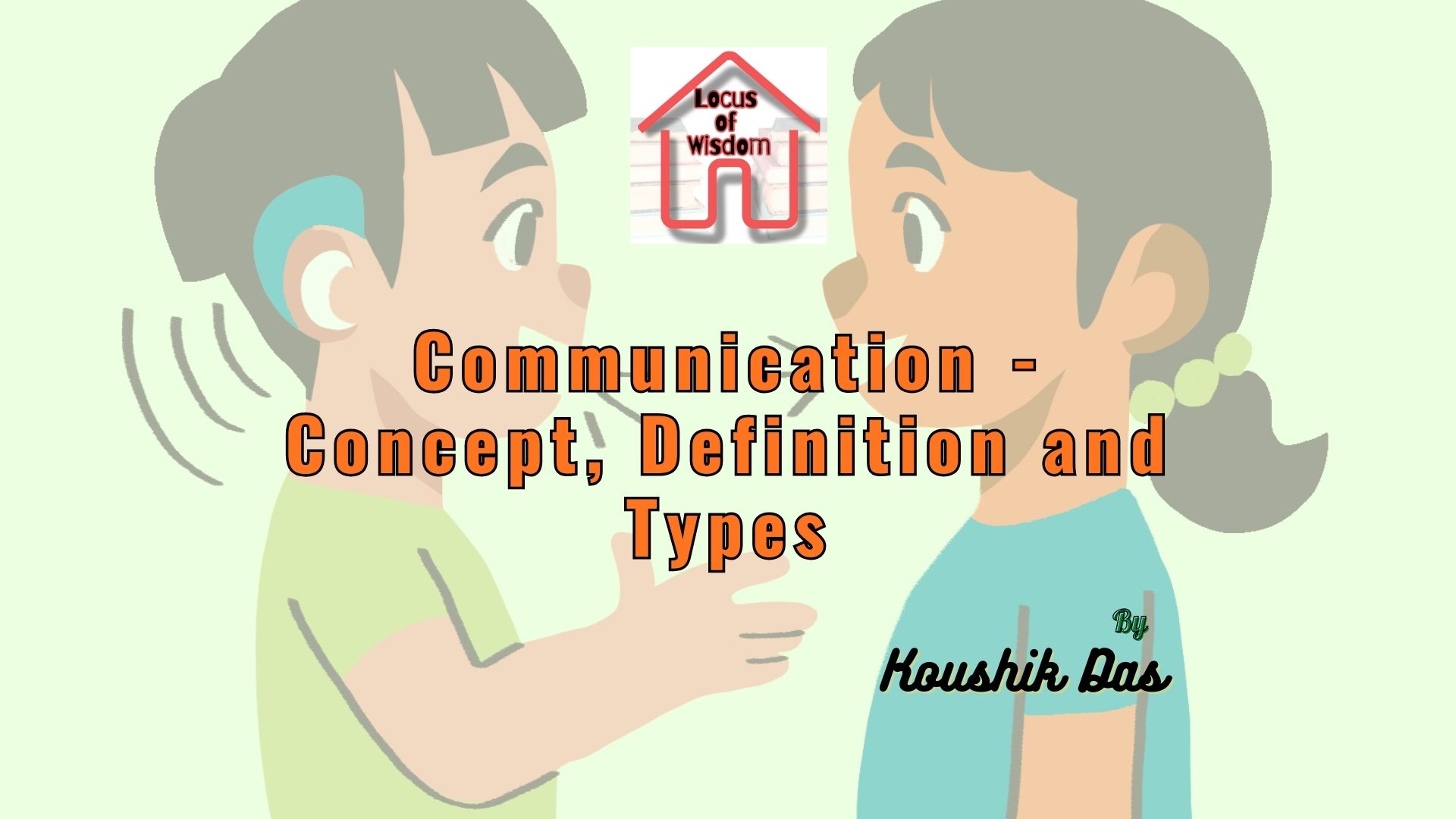
Communication (Introductory Concept of Communication) is an integral part of every living thing. In simple terms, communication is the exchange of information between two entities. It can be seen to occur between microorganisms at the cellular level and, more broadly, between herd members avoiding a predator. People have started communicating with each other since the beginning of the world because of their needs. Initially, people used to communicate through gestures or sign language. Later, when the language is fully developed, communication begins with the exchange of words or sentences with each other. After the invention of the alphabet, people began to use written communication. Today, communication has gone from individual levels of conversing to mass communication. The most important aspects of communication are best understood when there is a lack of it.
Definition of Communication
The word “communication” comes from the Latin word “communis,” which means ‘to make common’ or ‘to share.’ Effective communication is when the message conveyed by the sender is understood by the receiver in exactly the same way as it was intended. Good communication is not merely a process of transferring information from one entity to another. It is an art of first listening to or reading the information, understanding it, processing it, and then transferring the information. There is a huge amount of effort that goes into communication. Gestures, tone of voice, body language, and spoken language are some important aspects of communication. If the other person is unable to understand any of these factors, the process fails.
According to Edgar Dale (1961), “Communication is defined as the sharing of ideas and feelings in a mood of mutuality.”
According to S.K. Mangal, “Communication is a process of sharing or exchanging experiences, information, ideas, opinions, sentiments, thoughts, feelings, etc.”
Types of Communication
We can generally divide the communication process into four parts, namely:
Verbal Communication
This method or mode of communication relies on words to convey a message. It is a standard method of communication that we use in our daily lives to exchange general and specific information with each other. A phone conversation, a chat with a friend, an announcement, or giving a speech are all forms of verbal communication. Most of us find it effortless. As children, we learned verbal communication through the sounds around us. Verbal communication is further divided into four subcategories. Such as—
- Intrapersonal Communication: In this type of communication, an individual communicates with themselves or their own inner self. For example, thinking, writing a diary, etc.
- Interpersonal Communication: Face-to-face communication. For example, talking on the telephone.
- Group Communication: This type of communication occurs when more than two people are involved. For example, a family, a committee, etc.
- Mass Communication: In this case, the recipient of the communication is a large group of people. For example, a political rally.
Nonverbal Communication
Nonverbal communication It can be defined as the process of communicating by sending and receiving messages without words. In nonverbal communication, gestures, body language, facial expressions, eye gestures, clothing, voice, and others are used to convey a message. Similar to verbal communication, this kind of communication is rarely employed in isolation. One way to think of nonverbal communication is as a spice we use to give a little flavor to our conversations. When you’re furious, you might shake your finger at your youngster or raise your eyebrows to emphasize a point. All of these nonverbal clues aid in message delivery.
Written Communication
Written communication is any written message exchanged between two or more people. Written communication is generally more formal but less efficient than oral communication. Examples of written communication include email, text messages, etc.
Visual Communication
Visual communication is the practice of using visual elements to convey information or ideas. Types of visual communication include animated GIFs, screenshots, videos, pie charts, infographics, and slide deck presentations. It can be challenging to communicate your ideas clearly and succinctly using just words.
To Read More Posts - Click Here
Bibliography- Mangal, S.K. Essentials of Educational Technology. PHI Learning Private Limited, Delhi.
- https://socialmettle.com/importance-of-communication